Filed from Tuscany, Italy, where I am spending the week at the Founders Freedom Retreat. The files are still getting written. The espresso is better and I am looking forward to seeing Alicia Pagano's Key Note.
Regulators started looking at how carriers use AI in claims this spring. Most of the coverage treats it like something new showing up. It isn't. It wrote the first estimate on the last hail car that came through your door and it's been doing that for years.
The part nobody's talking about is what happens when the shop is running the same tool, on the carrier's behalf, on a vehicle that's about to drive away.
The short version
- The NAIC launched a twelve state pilot in March looking at insurer AI in claims. Total loss thresholds, damage assessment, parts valuation. Texas isn't one of the twelve.
- This isn't only a carrier story anymore. Jumpstart is the AI tool inside the CCC One mobile app. You tell it where the damage is, feed it photos, it writes an estimate. Some large MSOs are running 60 percent or more of their initial estimates through it. One is at roughly 98 percent.
- At CIC this spring, the CEO of Claim Genius described what these tools produce as a preliminary, initial estimate. CCC's stated number is 84 percent of the final bill in around 70 seconds.
- That number deserves a harder look than it's getting, and the same panel gives you the reason why.
- Both vendors said the gap gets handled by keeping a person involved and doing a full disassembly blueprint. That works when the car stays.
- On a drive-in it doesn't stay. And a pre-teardown estimate still has a job to do, which is to be complete for everything a visual inspection can establish. Adjacent panels, R&I, repair times, all of it.
- When it isn't, the customer either eats the difference out of pocket or hands the estimate to another shop, which then has to do the work the first estimator should have done. Lienholder requirements on larger checks push most of them toward one of those two rather than pocketing the money.
What the regulators are doing
The NAIC built this through its Big Data and Artificial Intelligence Working Group. Twelve states: California, Colorado, Connecticut, Florida, Iowa, Louisiana, Maryland, Pennsylvania, Rhode Island, Vermont, Virginia, Wisconsin. Carriers there submit their AI claims systems for review. It runs through September, with a national version targeted for the NAIC's fall meeting in November. Their own survey found 88 percent of auto insurers use or plan to use AI to evaluate claims.
What they're examining is the tools that set total loss thresholds, assess damage, and value parts. Everything that decides what a file is worth.
Texas isn't on the list. Neither is any state that regularly leads the country in hail. Make of that what you want.
It's on both sides of the table now
CCC had pushed more than 14 million claims through its computer vision AI by the end of 2022. Their Q1 numbers this year had 6,500 plus repair facilities on the AI estimating product. On the Q2 call at the end of July they said one of the largest independent multi-store operators in the country now starts roughly 98 percent of its estimates through Mobile Jumpstart, and is already running a 2.0 version using agentic AI. Two other large MSOs grew usage double digits in the same quarter. Some large organizations are at 60 percent or better.
CCC's AI products are past $120 million annualized, growing just under 50 percent. Two top five insurers expanded their use of First Look, which their CEO described as helping carriers identify total losses earlier in the claim. Claim Genius is in around 300 shops. Mitchell's been pre-populating parts and operations off photos since 2021 at least.
Ninety eight percent is wild work. Whatever you think of the tool, that's an organization that has decided this is simply how estimates begin now.
Nobody made them do it, either. Jumpstart is a shop tool and there's a real reason to want it. It saves the front counter time.
About that 84 percent
This spring's Collision Industry Conference had a panel on this, run by Scott VanHulle of I-CAR with Raj Pofale of Claim Genius and Mark Fincher of CCC.
Pofale said customers report saving 30 to 35 minutes per estimate, and that yes, there are gaps, because what it produces is a preliminary, initial estimate. Fincher said Mobile Jumpstart builds an estimate in about 70 seconds that captures 84 percent of what ends up on the final bill. Yoswick, who wrote it up, noted that some people might argue with that figure.
I'd like to argue with it, and the argument is sitting in the same conversation.
Pofale, on the same panel, said internal parts damage doesn't get picked up at all and that structural damage only gets caught some of the time. Fincher said the system won't guess about things it can't see. Both of those are honest and both are correct.
But run them against 84 percent of the final bill and something doesn't add up, unless the 84 percent is measuring something narrower than what most of us mean by the bill.
My guess, and it's a guess, is that these systems have gotten genuinely good at the thing they were built for, which is looking at an image and identifying which panels are damaged. That's real progress and I'm not dismissing it. But identifying the damaged panel is the easy part of an estimate. The money is in what comes after. Adjacent panel operations. Every R&I required to access the damage. Correct repair times rather than defaults. What the repair itself makes necessary on the panel next door.
I haven't run Jumpstart in about a year, but I tested it on a fair number of vehicles when I did, and it wasn't landing anywhere near 84 percent of a complete estimate. Not on the operations. Not on the R&I.
And whatever the number is in testing, the vehicles that come to us aren't test vehicles. They're dirty. They have unrelated prior damage that has to be sorted out from the loss. They have aftermarket parts already on them. Fincher himself mentioned washing the car first as something that helps the AI, which tells you what condition it wants and how often it gets it.
So take 84 percent as a best case under favorable conditions. On a hail car it isn't close, because hail is the worst possible damage type for a photo driven system. Nothing is loud. Damage sits on every panel and only becomes visible when a defined reflected line breaks across a dent. A customer's phone photo in flat afternoon light has no line in it to break.
The gap has one answer, and it works if the car stays
VanHulle asked both of them what the systems miss. Both landed in the same place. There's always a gap, a person still has to look at the vehicle, and the fix is a full disassembly blueprint.
That's right, and nobody in this industry disagrees. Teardown is what catches what the photos didn't.
It's also worth saying plainly that if the car stays at the shop that ran the Jumpstart, this mostly works out. That shop is going to tear the vehicle down and write the real estimate, whether they've got a dedicated repair planner in the back or one person doing everything. The preliminary number gets replaced by an actual one. The tool did the job it was built for, which was getting the customer moving.
The way I run it is intake photos, then damage photos, then teardown. The estimate or supplement gets written at teardown. Not before. Photos document and support what gets written rather than standing in for having the car apart in front of you.
So the tool isn't the problem. The problem is the files where the car never comes apart.
The initial estimate has its own job
Here's the thing that gets lost when everybody agrees the answer is teardown.
An estimate written before teardown is not supposed to be a placeholder. It has its own standard to meet, and that standard is everything a competent visual inspection can establish. Every damaged panel. Every adjacent panel affected. Every R&I required to get to the damage. Realistic repair times. The operations the repair makes necessary.
The vehicle owner is owed that document. Not a ticket. A correct accounting of what it takes to put the car back, based on what can be seen without pulling it apart. What they do with it afterward is their business. Repair it, don't repair it, take it somewhere else. That's their call and their car.
The failure isn't that a pre-teardown estimate misses hidden damage. Everybody knows it will. The failure is a pre-teardown estimate that doesn't even complete the pre-teardown job.
And then there's the drive-in
On a lot of DRP programs the shop writes drive-in estimates. Customer pulls up, you write it, they take it and go. That's not a shop estimate in the normal sense. You're writing as a representative of the insurance company. I did this for years on DRPs, and the customer walks out with a document and goes wherever they want with it.
Three things happen next.
Some of them get the car repaired and pay the difference out of pocket, because the estimate was short and the shop that does the work finds out how short.
Some take the check and never repair the vehicle. That group is smaller than you'd expect, though, because on payments over a certain amount most carriers put the lienholder on the check. If a customer can't cash it without the lienholder signing off, they're a lot more likely to bring the car somewhere and have the work done. So that practice mostly moves people into the next group rather than letting them pocket it.
And that next group takes the estimate to a different shop. That shop does the teardown, writes the supplement, and spends the whole time wondering who wrote the original. I've seen four and five line estimates that put five hundred dollars in a customer's hand after deductible and finished north of ten thousand.
Look at where the labor went on that third one. It isn't just the teardown. The next shop has to redo the external visual inspection too, because the adjacent panels and the R&I and the repair times that should have been on the first pass were never there. That work belonged to the carrier's elected representative, whether that's a staff appraiser or a DRP estimator writing on their behalf. It ends up performed for free by whoever the customer happens to walk into second.
Which brings it back around. If the initial estimate is being generated by a tool that both of its vendors describe as preliminary, and it's being handed to a customer on the carrier's behalf under a DRP contract, then you've got carriers writing short initials on some claims and shops writing them on others. Same underwriting problem, coming from two directions at once, and the shop side of it is voluntary.
Hail is where this stings most. Drive-in inspections are how a lot of hail volume moves, especially after a big event. And on a hail car nothing physical forces the correction later the way it does on a collision vehicle. The customer takes a check for a fraction of the damage and drives off with the file closed.
Nobody in that chain did anything wrong on purpose. That's what makes it worth writing about.
What it does to the total loss numbers
I wrote in the first post here that total loss frequency hit a record 23.1 percent, and that I think that's a floor and not a ceiling. This is a big part of why.
Total loss is repair cost against vehicle value. If the repair cost side comes in light from the start, some number of cars get routed repairable that were never actually measured. They aren't close calls that went the other way. Nobody established a real number on them.
CCC's CEO said on the Q2 call that First Look helps carriers spot total losses earlier, with two top five insurers expanding their use of it. Earlier means from photos, before anybody's been to the vehicle.
So a piece of that headline statistic rests on numbers generated before anyone looked at the car. It'll keep climbing, and it'll get reported as vehicles getting harder to fix rather than as estimates getting more complete.
Send one vehicle. I write it inside your CCC ONE or Mitchell account, under your shop name, every operation line noted, and I defend it with the appraiser.
The part I'd actually worry about
Everything above is damage assessment. Technical problem, technical answers, and the vendors are being reasonably straight about where things stand.
The other use isn't.
If a system runs a checklist to decide whether an operation gets covered, whether a procedure gets paid, whether a line stays or comes off, then it's executing internal rules. NVIDIA's writeup of the CCC partnership describes straight through processing as running on AI and insurer driven rules. That's a vendor describing the product. The rules are an input and the carrier supplies them.
Same rules I wrote about last post. The ones sitting above an appraiser, shaping what they're allowed to document. Some written down, plenty not. An internal rule doesn't have to line up with the policy language or with what the carrier is legally obligated to do. It never had to. It was guidance for staff, applied by people with discretion, in a world where you could pick up a phone and argue with somebody.
Put that rule in software and it changes. Applied identically every time, across more files than any claims department could touch, with nobody on the other end to talk to. The thing applying it isn't using judgment. It's executing.
A person applying an unwritten rule too hard is having a bad month. That rule in software is a policy running on every file that nobody ever had to write down or defend.
Nobody on the CIC panel was talking about this part. They were talking about estimating, which is their product. Coverage decisions are a different animal.
Is any of it good
Our reflex is that anything from the carrier side is bad, and that reflex makes us easy to ignore.
Consistency isn't automatically the enemy. Something that applies the same standard to every file is at least predictable, and it doesn't decide it doesn't like your shop. If your documentation is strong, a consistent reviewer might treat you better than an inconsistent person who was going to cut you anyway based on how the phone call went.
The time savings at the counter are real. Thirty five minutes back on an estimate is not nothing, and a customer who gets a number while they're standing there beats one sitting in a lobby.
I'll be careful about the speed claim beyond that, though, because none of this has made the back end any faster. Estimate and supplement turnaround from carriers is as inconsistent as it's ever been and still runs into weeks. The front of the process got quicker. Getting an answer on the money did not.
And in a shop where the car stays and gets torn down, I don't have a problem with any of it. That's a fast tool being used for the part it's good at.
VanHulle's framing at CIC was that this is early, it'll keep improving, and the industry can either complain about it or work on making it better. Hard to argue with that.
My objection is narrower than the usual complaint. A preliminary number should never be the final number, and on the files where no teardown is ever coming, the pre-teardown estimate has to be right on its own terms.
Which puts it back on your photos
Here's what nobody picked up from that CIC panel.
VanHulle asked both vendors whether bad photos hurt the output. Pofale didn't hedge. He reached for the oldest line in computing, garbage in and garbage out, and said the technology only does anything worthwhile when you feed it good data. Fincher talked about washing the car first, about proper lighting, about giving the system a consistent set of images. He described shops shooting from two inches away, thinking they're showing the damage, and producing an image with no context in it.
And VanHulle said he's still surprised how bad the photos coming out of shops are, given what phone cameras can do now.
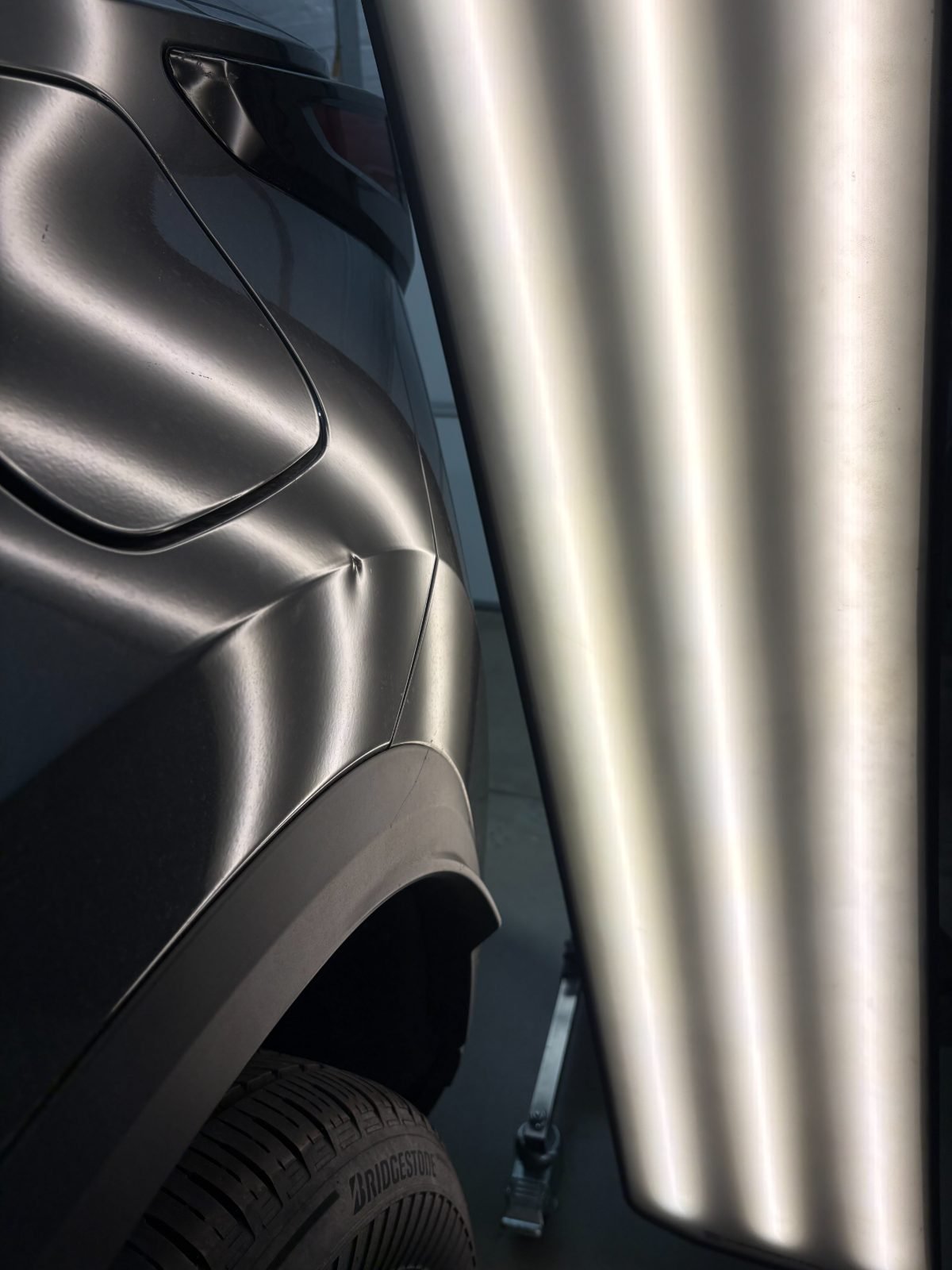
So the people building these systems are saying in public that photo quality is the variable that determines what comes out, and the chairman of the committee is saying the industry is still feeding them garbage.
That's not bad news for us. If more of the decision is getting made off the file instead of at the car, then what's in the file isn't most of the input, it's all of it. Which makes documentation the highest leverage thing in your building, and unlike labor rates and carrier rules and NAIC pilots, that one's yours.
It also means the excuse is gone. If you've been telling yourself hail can't really be captured in photos, that's costing you money on every file and it isn't true. I've built photo packages carriers have complimented, and I've trained staff and independent appraisers on how to do it. It can be done.
That's the next one, end of the month. The photo problem in hail, why most packages don't work, what a good one changes about a file, and how it lets you have an honest conversation with a customer about damage nobody's paying for.
Technique stays where it lives, though. Can't give away all my secrets for free.
Frequently asked questions
Do insurance companies and shops use AI to write repair estimates?
Both do. CCC reported more than 6,500 repair facilities using its AI estimating capability as of Q1 2026, and said on its Q2 call that one large multi-store operator now starts roughly 98 percent of its estimates through Mobile Jumpstart, the AI tool within the CCC One mobile app. Claim Genius reported its tool in about 300 shops. On the carrier side, CCC's First Look is used to route claims and identify potential total losses early.
How accurate is an AI photo estimate?
CCC has stated that Mobile Jumpstart produces an estimate in roughly 70 seconds capturing 84 percent of the final bill. That figure is worth examining, because vendors on the same industry panel also said internal parts damage is not picked up and structural damage is only partly identified. Image analysis has become effective at identifying which panels are damaged, but adjacent panel operations, R&I required for access, and correct repair times are where estimate dollars concentrate, and those are not established from a photograph.
What is a drive-in estimate?
A drive-in estimate is written when a vehicle is brought to a location for inspection without being left for repair. On many direct repair programs the repair facility writes these on the insurer's behalf, and the customer takes the estimate and leaves. Because the vehicle is never disassembled, the estimate has to be complete for everything a visual inspection can establish, including adjacent panel operations and required R&I.
What should be included in an estimate written before teardown?
Every damaged panel visible on inspection, every adjacent panel affected by those repairs, all R&I operations required to access the damage, realistic repair times rather than defaults, and the operations the repair itself makes necessary. A pre-teardown estimate is not expected to identify hidden damage, but it is expected to be complete for what can be observed without disassembly.
Should a repair shop use AI photo estimating?
The question is what happens after the initial estimate. When the vehicle stays at that facility for repair, teardown follows and the preliminary number is replaced by a complete one. The exposure is on vehicles that leave, particularly drive-in estimates written on an insurer's behalf, where no disassembly will ever occur and the initial document becomes the basis of the settlement.
Why are AI generated photo estimates usually low?
These systems evaluate the images they receive, and initial claim photos are typically taken without controlled lighting, which matters especially for hail because the damage is only visible when a defined reflected line breaks across a dent. Separately, identifying damage in an image is different from knowing how a vehicle is repaired, what has to come off to access the damage, and what the repair makes necessary elsewhere.
Does photo quality affect AI estimate results?
Substantially, and the companies building these tools say so directly. Industry panelists have pointed to clean vehicles, proper lighting, and consistent image sets as factors that improve accuracy, and have identified extreme close-ups without surrounding context as a common failure that leaves the system unable to identify what area of the vehicle it is looking at.
Can AI decide whether an operation is covered?
Automated systems can apply carrier supplied rules to claims decisions, and vendor descriptions of straight through processing explicitly include insurer driven rules as an input. Whether those internal rules align with policy language and applicable law is a separate question, and it is one focus of current regulatory examination.
About the author
Chris Johnson is the founder of Storm Rider Solutions. He has worked in collision repair since 2008 as a service writer, estimator, production manager, assistant manager, director of estimatics, and director of hail and collision operations for multi million dollar operations, and has specialized in hail estimating since 2021. He is a United States Marine Corps veteran.
About Storm Rider Solutions
Storm Rider Solutions writes remote hail estimates and supplements for PDR and collision shops, inside your CCC ONE or Mitchell account, under your shop name. Every operation is line noted, and I defend the file with the appraiser on your behalf. It is overflow support for shops whose estimators are buried, not a replacement for them.
This article describes general industry practice and the author's own observations. Company figures cited are as reported publicly by the companies named. It is not legal advice.